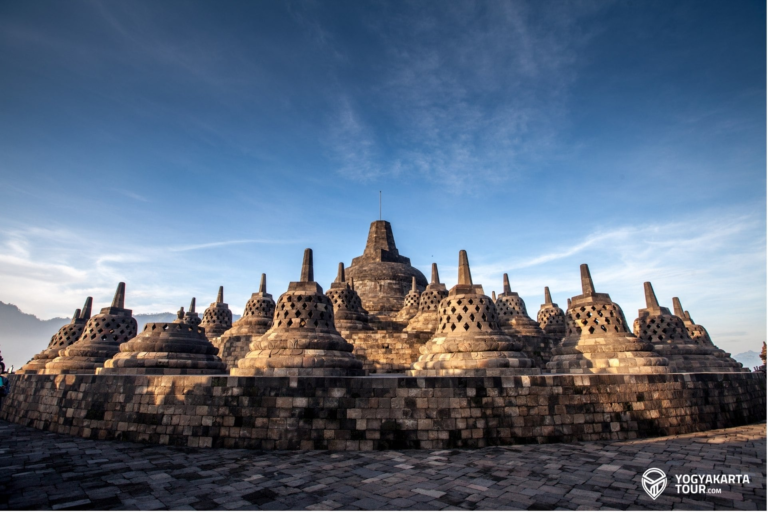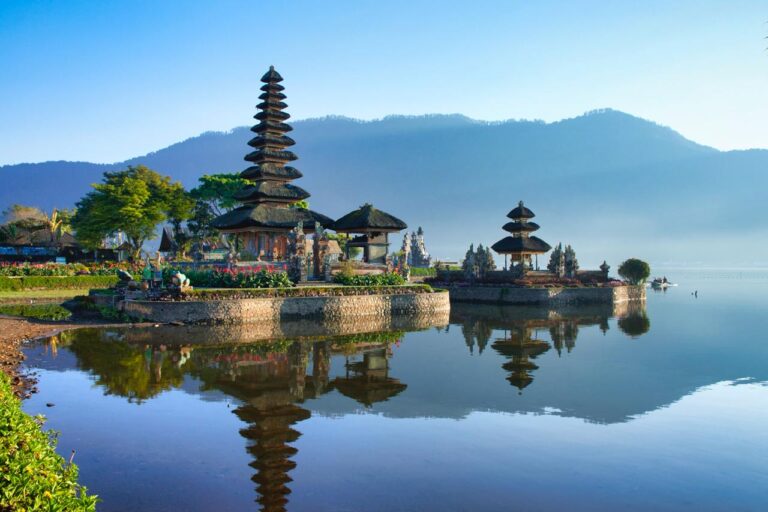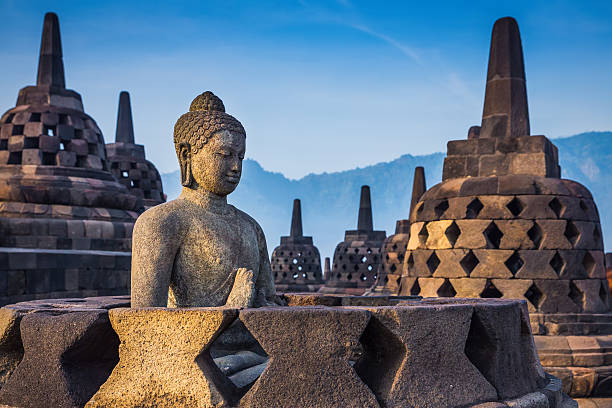
It is fascinating to stand before the world’s largest Buddhist monument at sunrise, watching the first golden rays illuminate ancient stone stupas while mist rolls across the Javanese landscape. Then, a few hours later, finding yourself at Indonesia’s most magnificent Hindu temple complex, marvelling at towering spires dedicated to the gods Brahma, Vishnu, and Shiva. This isn’t a dream itinerary spanning weeks. This is what visiting Borobudur and Prambanan in one day looks like, and thousands of travellers do exactly this every year.
The journey from Borobudur to Prambanan isn’t just about covering distance. It’s about travelling through time, shifting from Buddhist philosophy to Hindu cosmology, and experiencing two UNESCO World Heritage Sites that represent the absolute pinnacle of ancient Indonesian architecture. Whether you’re short on time or simply want to maximise your Yogyakarta adventure, combining these two incredible temples in one day makes perfect sense.
In this complete guide on how to go from Borobudur Temple to Prambanan Temple, you’ll discover everything you need to know about travelling from Borobudur to Prambanan Temple. We’ll cover the distance and travel time, explain why there’s no direct public transport, break down all your transportation options, and share insider tips for making the most of your two-temple adventure. Plus, we’ll suggest other amazing attractions you can add to your itinerary if you have extra time.
Let’s go in and plan your perfect temple day!
Understanding Borobudur, Prambanan, and Yogyakarta
Before we talk about getting from one temple to another, let’s understand what makes each of these places special and how they relate to Yogyakarta.
Borobudur Temple stands as the world’s largest Buddhist monument and one of the greatest religious structures ever built. Located in Magelang Regency about 40 kilometers northwest of Yogyakarta city center, this 9th century masterpiece consists of nine stacked platforms topped by a central dome. The temple is decorated with 2,672 relief panels and 504 Buddha statues, creating a massive three dimensional mandala that represents Buddhist cosmology.
What makes Borobudur truly special isn’t just its size but its purpose. The entire structure is designed as a pilgrimage path. As you walk through the galleries and ascend through the levels, you’re symbolically moving from the world of desire through the world of forms and finally reaching the world of formlessness at the top. The sunrise view from nearby hills, with Borobudur emerging from the morning mist with Mount Merapi in the background, creates one of Indonesia’s most iconic images.
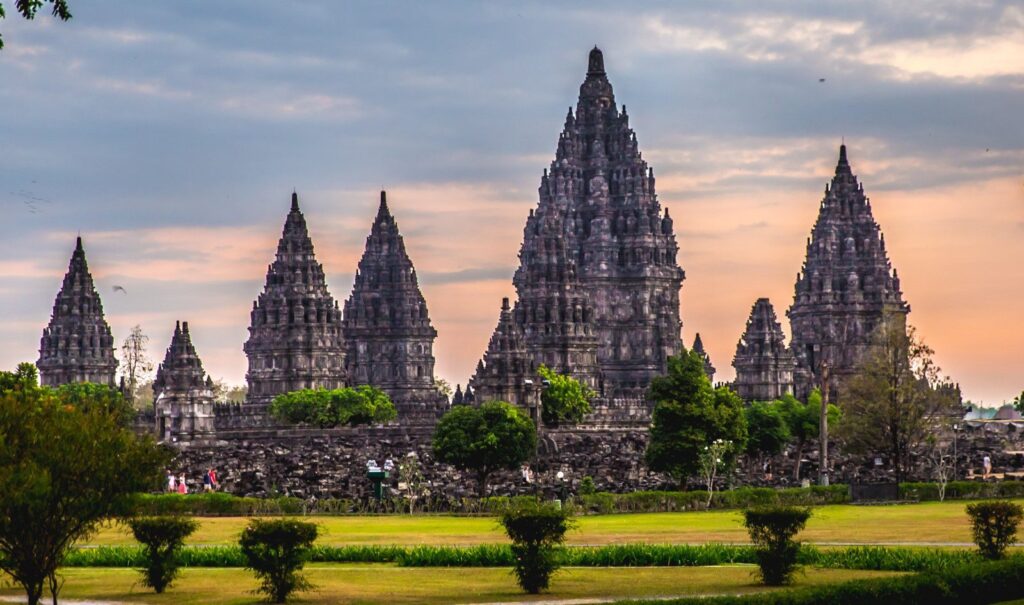
Prambanan Temple, on the other hand, represents Hindu architecture at its finest. Built around 850 CE, roughly the same period as Borobudur, this temple complex sits about 17 kilometers east of Yogyakarta city centre. The main compound consists of 240 temples, though the three main towers dedicated to Brahma, Vishnu, and Shiva steal the show with their soaring 47 meter height and intricate relief carvings depicting the Ramayana epic.
What’s fascinating about Prambanan is how it shows the religious diversity of ancient Java. While Borobudur was built by Buddhist rulers, Prambanan was constructed by Hindu kings, yet both coexisted in the same region during roughly the same time period. The detailed carvings telling Hindu stories, the precise alignment of the temples, and the sheer ambition of the architecture make Prambanan just as impressive as its Buddhist counterpart.
Yogyakarta city sits almost exactly between these two temples, serving as the perfect base for exploring both. This cultural capital of Java offers excellent accommodation, food, and transportation options. Most travellers stay in Yogyakarta, visit Borobudur early (often for sunrise), then continue to Prambanan in the afternoon, before returning to the city in the evening. It’s a full day but absolutely doable and incredibly rewarding.
Distance and Travel Time: How Long Does It Take from Borobudur to Prambanan Temple?
According to multiple travel sources, the direct driving distance from Borobudur to Prambanan is approximately 53 kilometers (32.9 miles). In normal traffic conditions with no stops, the drive takes about 45 to 50 minutes.
However, real travel time depends on several factors. Traffic can significantly impact your journey, especially if you’re traveling during peak hours or on weekends. The route passes through parts of Yogyakarta or skirting around the city, and Indonesian traffic can be unpredictable. During busy times, the journey could stretch to 1 to 1.5 hours.
The roads between Borobudur and Prambanan are generally in decent condition. You’ll travel through a mix of rural countryside, small towns, and urban areas as you approach Prambanan. The scenery includes rice fields, local villages, and glimpses of daily Javanese life, making the journey itself part of the experience.
Here’s what a typical timeline looks like if you’re visiting both temples in one day. Start with sunrise at Borobudur around 5:30 to 6:00 AM (depending on season). Join the climbing tour at Borobudur from 8:00 to 9:30 AM. Explore the temple grounds until 10:00 to 10:30 AM. Depart Borobudur for Prambanan around 10:30 to 11:00 AM. Drive time of 45 minutes to 1.5 hours with possible lunch stop. Arrive at Prambanan around 12:00 to 1:00 PM. Explore Prambanan complex for 2 to 3 hours. Depart Prambanan around 3:00 to 4:00 PM. Return to Yogyakarta (30 to 40 minutes).
This schedule allows you to experience sunrise at Borobudur (the highlight for most visitors), spend quality time at both temples without rushing, and return to Yogyakarta with the whole evening ahead of you.
Why There’s No Direct Public Transport from Borobudur to Prambanan)
Here’s something that surprises many travellers: there is no direct public bus, shuttle, or any form of public transportation running between Borobudur and Prambanan. Zero. None. This isn’t because the route isn’t popular. It’s simply how the Indonesian public transport system works in this region.
The existing public transport is designed to serve locals commuting between towns and villages to Yogyakarta city center, not tourists traveling between two temples that sit on opposite sides of the city. If you insisted on using only public transport, you’d need to take a bus from Borobudur back to Yogyakarta (specifically to Jombor Terminal), then catch a different bus or the Trans Jogja to Prambanan. This convoluted route could easily take 3 to 4 hours or more, depending on waiting times and connections.
As one travel guide accurately puts it, taking public transport from Borobudur to Prambanan can take forever and is simply not practical for tourists on a schedule. You’d spend more time sitting in buses and waiting at terminals than actually seeing the temples.
This is why virtually all travelers visiting both temples in one day use either ride sharing apps, private drivers, or organized tours. These options are affordable by international standards, save enormous amounts of time, and provide flexibility that public transport simply can’t match.
Check the information about Borobudur Temple Ticket and Prambanan Temple Ticket before you are going to visit both temple.
Transportation Options from Borobudur to Prambanan
Now let’s explore your actual options for getting from Borobudur to Prambanan Temple, ranked from most to least practical for tourists.
Option 1: Online Ride Sharing (Grab or Gojek)
Indonesia’s two main ride sharing apps, Grab and Gojek, work well for temple hopping and have become the go to solution for many independent travelers. Both apps function similarly to Uber, offering both car and motorbike options.
To use Grab or Gojek, download the app before your trip (available on App Store and Google Play). Create an account and add a payment method (credit card, debit card, or you can pay cash). Set your pickup location (Borobudur Temple area). Set your destination (Prambanan Temple). Choose between car (GrabCar/GoCar) or motorbike (GrabBike/GojekBike). Confirm the fare and request the ride.
According to various traveler reports, a Grab or Gojek car from Borobudur to Prambanan typically costs around 100,000 to 150,000 IDR (roughly 6 to 9 USD) in normal conditions. Prices can increase during peak hours, bad weather, or if there’s high demand and low driver availability. Motorbike rides are cheaper, usually 50,000 to 80,000 IDR, but obviously less comfortable and not suitable if you’re with family or carrying bags.
The big advantages of Grab and Gojek are that you only pay for what you need (one way if desired), no advance booking required in most cases, payment is transparent through the app, drivers use GPS so no confusion about directions, and you can rate drivers and vice versa for accountability.
The potential drawbacks include availability can be limited at Borobudur (fewer drivers in rural areas compared to city centre), you might wait 10 to 20 minutes for a driver to arrive, and if you’re planning to visit both temples, you’ll need to book separate rides which adds up cost wise.
Pro tip: Some travellers negotiate with their Grab or Gojek driver to wait at each temple and drive them to the next destination. You can arrange this by messaging the driver through the app or speaking with them when they pick you up. Many drivers are happy to do this for a negotiated fee (usually 300,000 to 500,000 IDR for the full day), essentially turning them into your private driver.
Option 2: Renting a Motorcycle
For experienced riders comfortable with Indonesian traffic, renting a scooter or motorcycle offers maximum freedom and adventure. Motorbike rental is widely available in Yogyakarta with daily rates ranging from 90,000 to 150,000 IDR depending on the bike type and rental duration.
The process is straightforward. Find a rental shop in Yogyakarta (many are around the Malioboro and Prawirotaman areas). Show your driver’s license (international license preferred but not always required). Pay a deposit (usually your passport or cash deposit). Receive the bike with a full tank of gas (you return it with a full tank).
Riding from Borobudur to Prambanan gives you complete control over timing, lets you stop anywhere along the way for photos or food, costs significantly less than hiring a driver, and offers an authentic adventure experience.
However, consider the downsides. Indonesian traffic is chaotic and not for nervous riders. The distance means 45 to 60 minutes of riding in tropical heat. You’ll need to park and secure the bike at each temple. There’s risk of accidents or bike issues. Not suitable if you’re with non riding companions.
If you do rent a motorcycle, use GPS navigation (Google Maps works well), wear a helmet (legally required and just smart), bring your license and bike papers (police sometimes check), stay hydrated (it gets hot), fill up with petrol before leaving Yogyakarta, and ride defensively (assume other vehicles don’t see you).
Option 3: Organized Tour Packages
For most travelers, especially those who want a hassle free experience, booking an organized tour package makes the most sense. Tour packages typically include round trip transportation from your hotel in Yogyakarta, entrance fees to both temples, English speaking guide, lunch at a local restaurant, and sometimes additional stops at other attractions.
Borobudur Sunrise Tour offers several excellent package options. For regular timing, their Borobudur and Prambanan Temple tour provides the classic experience visiting both temples during normal hours. For early risers, the Borobudur Sunrise and Prambanan package includes the magical sunrise experience at Borobudur before continuing to Prambanan.
These tours typically operate on a schedule like this. Hotel pickup around 4:30 to 5:00 AM (for sunrise tours) or 7:00 to 8:00 AM (for regular tours). Arrive at Borobudur for sunrise viewing or join the climbing tour at 8:00 AM. Explore Borobudur temple grounds. Lunch at a local restaurant. Visit Prambanan Temple in the afternoon. Return to Yogyakarta hotel around 5:00 to 6:00 PM.
The advantages are obvious. Zero stress about navigation or timing. Guides provide historical and cultural context you’d miss exploring independently. Transportation is comfortable (air conditioned vehicles). Everything is pre arranged and paid for. You meet other travellers and can share the experience.
The disadvantages include less flexibility on timing (you’re on the tour schedule), group dynamics (you might be with people who move at different paces), and slightly higher cost compared to DIY options (though often not by much when you factor in all the separate costs).

Option 4: Sharing Transport
For budget travelers or those traveling solo who don’t want to pay for a private tour, sharing transport is an excellent middle ground. Platforms like GetYourGuide offer sharing transport options where you join other travelers in a van or minibus.
According to travel forums, sharing transport typically costs around 200,000 to 400,000 IDR per person depending on the specific package and number of participants. You share the vehicle with other tourists (usually 4 to 12 people total), split the cost making it cheaper than private options, still get the convenience of door to door service, and often includes a driver who speaks some English.
The trade off is that you’re working around other people’s schedules, pickups might take longer if the vehicle collects passengers from multiple hotels, and you have less control over lunch stops and timing compared to a fully private tour.
Making the Most of Your Two Temple Day
Visiting both Borobudur and Prambanan in one day is absolutely doable, but doing it well requires some planning. Here are insider tips to maximize your experience.
Start early. The Borobudur sunrise experience is worth waking up for. Not only is it stunningly beautiful, but you’ll beat the midday heat and crowds. If sunrise isn’t possible, aim to arrive at Borobudur when it opens (6:30 AM for the grounds, or your booked climbing slot starting from 8:30 AM).
Wear appropriate clothing. Both temples require modest dress. Shoulders and knees should be covered. Comfortable walking shoes are essential as you’ll be climbing steps and walking on uneven surfaces. Bring a hat and sunglasses for sun protection.
Stay hydrated and bring snacks. Temple exploration in tropical heat is exhausting. Carry water bottles (you can refill at the temples) and energy snacks. Both temple complexes have food stalls, but prices are touristy.
Allocate enough time at each temple. Give yourself at least 2 to 3 hours at Borobudur (more if you’re doing sunrise), and 2 to 3 hours at Prambanan. Rushing through these incredible sites to check them off a list defeats the purpose.
Consider a guide for deeper understanding. While both temples are impressive visually, understanding the stories depicted in the relief carvings and the cosmological significance of the architecture transforms the experience. Most tour packages include guides, but you can also hire guides at the temple entrances.
Plan for lunch between temples. The drive from Borobudur to Prambanan is perfect for a lunch break. If you’re on a tour, this is usually included. If you’re traveling independently, there are numerous warungs (local restaurants) along the route or you can eat in Yogyakarta if you’re passing through.
Additional Attractions Between Borobudur to Prambanan
If you have extra time or energy, several fantastic attractions sit between or near Borobudur and Prambanan, making excellent additions to your itinerary.
Mount Merapi Jeep Tour

Mount Merapi, one of Indonesia’s most active volcanoes, looms over the landscape between Borobudur and Yogyakarta. A Merapi jeep tour takes you to viewpoints and through areas affected by past eruptions, offering a thrilling look at Indonesia’s volcanic power.
The tour typically involves riding in modified 4×4 jeeps through volcanic terrain, visiting the Museum Sisa Hartaku (a museum showing items preserved from eruptions), seeing the lava flow paths, and reaching viewpoints where you can see Merapi’s smoking crater.
Most Merapi tours take 2 to 3 hours and cost around 350,000 to 500,000 IDR per jeep (jeeps typically seat 4 to 6 people). This adds adventure and geological education to your temple cultural experience. Many tour operators offer combined packages: Borobudur sunrise, Merapi jeep tour, then Prambanan.
Sultan’s Palace (Kraton) and Taman Sari Water Castle

If your route from Borobudur to Prambanan passes through Yogyakarta city center (which some routes do), consider stopping at the Kraton and Taman Sari.
The Kraton is the Sultan’s Palace, the center of Javanese culture and still the residence of the Sultan of Yogyakarta. The complex showcases traditional Javanese architecture, houses a museum with royal artifacts, and offers gamelan music and dance performances at certain times.
Just a short walk from the Kraton is Taman Sari, the Water Castle. This 18th century complex was once the Sultan’s pleasure garden, featuring bathing pools, meditation chambers, and underground tunnels. Though partially in ruins, Taman Sari offers a romantic, mysterious atmosphere and excellent photo opportunities.
Both sites are in the same area and can be visited in 1.5 to 2 hours combined. Entrance fees are modest (around 15,000 to 25,000 IDR for Kraton and similar for Taman Sari). If you’re interested in Javanese royal history and culture, this adds wonderful context to your temple visits.
The only consideration is timing. Adding these stops means your Borobudur to Prambanan day becomes quite long. This works best if you skip the sunrise at Borobudur and start your day at a more relaxed pace, or if you have a full two days and dedicate one day to temples and another to city attractions.
Practical Tips for Your Temple Journey
Bring cash in Indonesian Rupiah. While some tour operators accept cards, and you can pay for Grab/Gojek through the app, you’ll need cash for entrance fees if buying separately, food and drinks, tips for guides, and any souvenirs.
Check weather forecasts. The dry season (April to October) is generally better for temple visits, but rain is possible year round. Bring a light raincoat or umbrella during rainy season (November to March).
Book Borobudur climbing tickets in advance. Since 2023, Borobudur requires advance booking for the climbing tour. You cannot just show up and walk to the top anymore. Book through the official website or use a tour operator who handles this for you.
Arrive early at both temples. Even beyond sunrise, early arrival means fewer crowds, cooler temperatures, and better photo opportunities.
Respect local customs. These are active religious sites, not just tourist attractions. Dress modestly, speak quietly, don’t climb on structures you’re not supposed to, and follow all posted rules.
Protect yourself from the sun. Sunscreen, hats, and sunglasses are essential. The tropical sun is intense, especially at midday. Heat exhaustion is real, especially after climbing Borobudur’s multiple levels.
Consider travel insurance. If you’re renting a motorcycle or doing adventure activities like the Merapi jeep tour, proper travel insurance provides peace of mind.
Why Visit Both Temples in One Day?
You might wonder whether cramming two major temples into one day is worth it, or if you should dedicate separate days to each. The answer depends on your travel style and schedule.
Visiting both in one day makes sense if you have limited time in Yogyakarta (2 to 3 days total), want to maximize efficiency and see Java’s two most important temples quickly, enjoy full, active days rather than slower paced travel, or are on a moderate budget (one day of transportation and tours is cheaper than two separate days).
Taking separate days works better if you have 4 or more days in Yogyakarta, prefer a relaxed pace without feeling rushed, want to explore each temple complex thoroughly including smaller temples in the area, plan to add other activities (like Merapi, Kraton, or Taman Sari) and want breathing room in your schedule.
There’s no wrong answer. Many travelers successfully visit both temples in one day and feel satisfied with the experience. Others prefer dedicating full days to each temple, adding nearby attractions, and avoiding any sense of hurry.
What virtually everyone agrees on: both Borobudur and Prambanan deserve your time. Seeing one but not the other means missing half the story of Java’s incredible ancient civilization.