Quick Answer: Borobudur Temple Structure tickets for international visitors are currently listed from approximately IDR 455,000 per adult, although the final ticket price can vary depending on the selected date, ticket category, or promotion. The structure ticket includes access to the temple structure, a licensed guide, wristband ticket, and traditional Upanat sandals. Always check the official Borobudur booking platform for the final price and availability on your travel date.
2,672 relief panels. 504 Buddha statues. 2 million stone blocks. Zero cement.
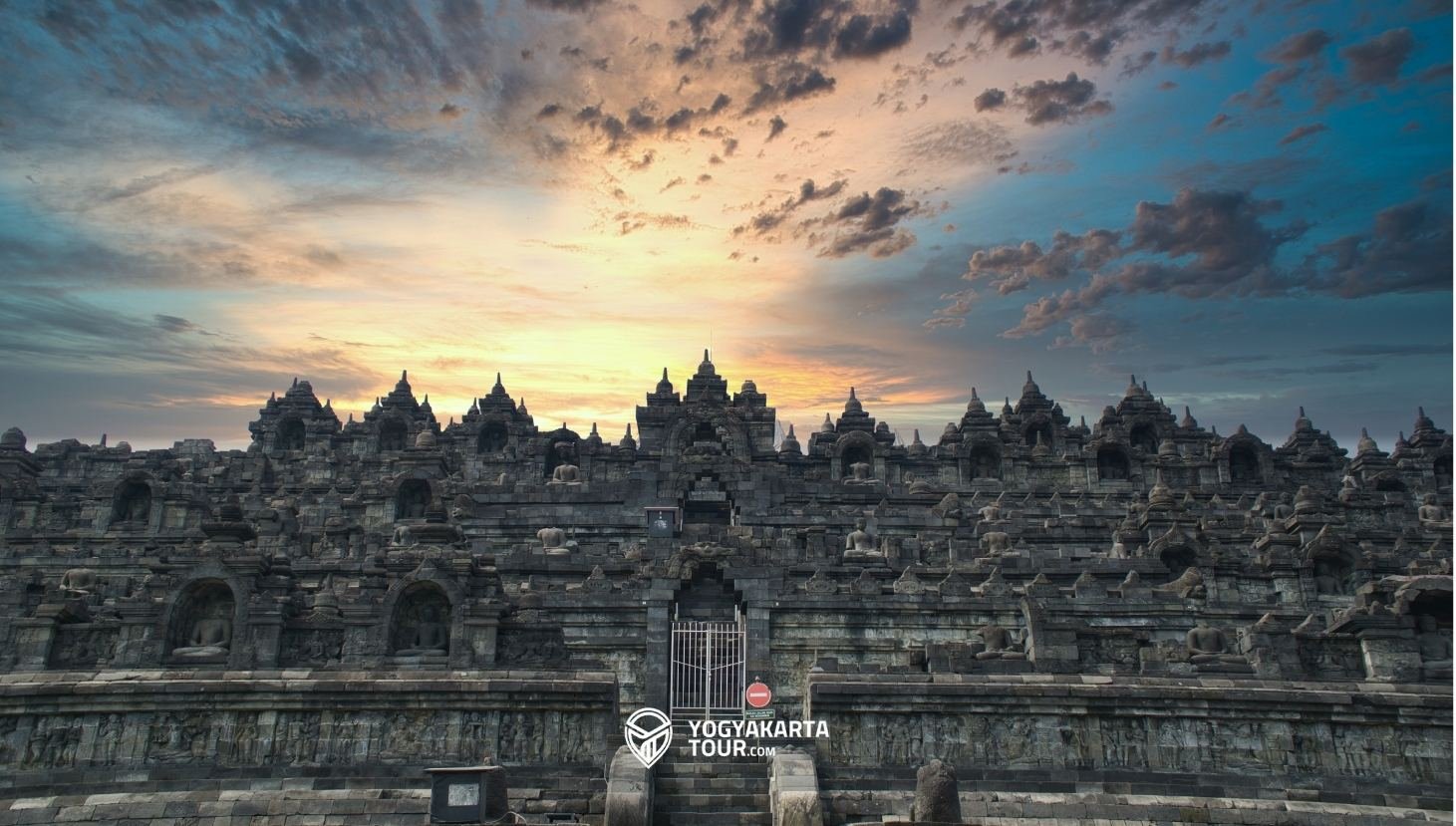
Those are not just numbers. They describe a monument that took three generations to build, was abandoned for nearly a thousand years, swallowed by jungle and volcanic ash, and then painstakingly reassembled stone by stone in one of the largest heritage restoration projects in history. Borobudur is the largest Buddhist monument ever built, and it sits not in a major world capital but on a quiet hilltop in Central Java, surrounded by rice fields and two active volcanoes.
Every year, roughly 3.5 million people visit. Most of them arrive at 10:00 AM, queue for 30 minutes in the heat, spend 90 minutes walking the terraces without a guide, and leave with photographs they could have taken from Google Images. They experience perhaps 10 percent of what Borobudur actually offers.
The other 90 percent is available to anyone willing to arrive before dawn. At 5:00 AM, standing on the upper terrace in near-darkness while mist fills the valleys below and the silhouette of Mount Merapi appears against a slowly brightening sky, Borobudur stops being a tourist attraction and becomes something closer to what it was always meant to be: a place that changes how you see the world.
This guide tells you exactly how to get there, what to pay, when to go, and how to make your visit one of the great travel experiences of your life.
Before we continue to the main topics, please contact us if you need tour package in Yogyakarta City. We have an excellent review by Trip Advisor or by Viator. You may check our tour package in this link : Yogyakarta Tour or check MountBromoIjen.com for Mount Bromo and Ijen Tour Package . You could contact us via email at [email protected] or just simply contact us by pressing the whatsapp button in the right corner.
1. History of Borobudur Temple
Borobudur Temple was built during the reign of the Sailendra Dynasty, a Buddhist royal family that dominated Central Java in the 8th and 9th centuries. Construction is estimated to have begun around 780 CE and taken approximately 75 years to complete. No written records from the original construction period survive, so much of what we know comes from archaeological study of the monument itself and from later Javanese and foreign texts.
The monument was built without cement. Two million blocks of volcanic andesite stone were quarried, shaped, and fitted together using an interlocking system similar to a three-dimensional puzzle. The engineering involved is remarkable: Borobudur was constructed over a natural hill, which was partially shaped and reinforced to form the foundation. Water drainage was built into the structure from the beginning, a necessary feature given Java’s heavy rainfall.
The name Borobudur is believed to derive from the Sanskrit words Vihara Buddha Uhr, meaning Buddhist Monastery on the Hill, though several other etymologies have been proposed. The monument functions simultaneously as a temple, a shrine, and a pilgrimage path. A visitor who enters at the base and climbs to the summit follows a prescribed spiritual journey through three symbolic realms: Kamadhatu at the base representing the world of desire, Rupadhatu in the middle tiers representing the world of form, and Arupadhatu at the top representing the formless world of enlightenment.
Borobudur was abandoned sometime around the 10th century, most likely when political and religious power shifted from Central Java to East Java. Volcanic eruptions from Mount Merapi buried the lower levels under ash and jungle growth covered the rest. For centuries the monument was largely forgotten, though local communities retained oral traditions about it. Sir Thomas Stamford Raffles, then the British colonial governor of Java, was informed of the site in 1814 and commissioned a survey. Dutch engineer H.C. Cornelius led a two-month clearing operation, revealing the monument to the outside world.
The first comprehensive restoration was carried out by the Dutch between 1907 and 1911 under Theodoor van Erp, who restored the upper circular terraces and stupas. A far more thorough restoration was undertaken between 1975 and 1982 by the Indonesian government in partnership with UNESCO. This project dismantled and reassembled the entire monument, cleaning each stone, improving drainage, and reinforcing the structure from within. The total cost exceeded USD 25 million. UNESCO added Borobudur to its World Heritage List in 1991.
The monument contains 2,672 individual relief panels carved into its walls and balustrades, depicting scenes from Buddhist texts and from everyday Javanese life in the 8th century. If laid out in a single line, these panels would extend for nearly five kilometres. They represent the most complete surviving narrative in stone from the ancient Buddhist world. Borobudur also features 504 Buddha statues, each positioned in a specific direction corresponding to different mudras, or hand gestures, each carrying symbolic meaning.
2. Borobudur Ticket Price 2026
Borobudur ticket prices depend on your visitor category and the type of experience you choose. Instead of looking only at the cheapest ticket, it is important to understand what level of access each ticket provides. A ticket that only allows access to the surrounding area is very different from a ticket that allows you to climb the actual Borobudur monument.
| Borobudur Ticket Type | Visitor | Estimated Price / Starting Price | Access |
|---|---|---|---|
| Temple Ground | Domestic Visitor | Check official booking portal | Temple grounds only |
| Temple Structure | Domestic Adult | IDR 150,000 | Ground + temple structure |
| Temple Structure | International Adult | IDR 455,000 | Ground + temple structure |
| Temple Structure | International Child | IDR 305,000 | Ground + temple structure |
| Borobudur Sunrise | Domestic Visitor | IDR 500,000 | Special sunrise access |
| Borobudur Sunset Full Experience | International Visitor | IDR 750,000 | Special sunrise access |
| Borobudur Sunrise | International Visitor | IDR 1,000,000 | Special sunrise access |
| Borobudur Sunrise | Domestic Visitor | IDR 500,000 | Special sunset access |
| Borobudur Sunset Full Experience | International Visitor | IDR 750,000 | Special sunset access |
| Borobudur Sunset | International Visitor | IDR 1,000,000 | Special sunset access |
Note: Children under 3 years old are free of charge. Regular Temple Structure access follows scheduled entry sessions within the temple’s operating hours. Borobudur Sunrise is a special early-access experience from 04:00 to 07:30 WIB, while Borobudur Sunset runs from 16:00 to 19:30 WIB. Ticket prices, package inclusions, visitor quotas, and availability may change depending on the selected date, so always check the official Borobudur booking platform before purchasing (Last update September 2026).
3. Borobudur Temple Ground vs Temple Structure Ticket
This is one of the most important things to understand before booking a Borobudur ticket.
a. Temple Ground Ticket
The Temple Ground ticket is intended for visitors who want to explore the surrounding Borobudur archaeological park without climbing the monument. From the ground, you can still see the entire structure of Borobudur, take photographs, walk around the monument, and enjoy the surrounding park.
However, you will not be able to walk through the upper terraces or stand among the famous bell-shaped stupas. The official Borobudur ticketing platform currently identifies the regular Temple Ground option as being available for domestic visitors. International travelers should therefore check the latest ticket options shown on the official booking website for their selected date.
b. Temple Structure Ticket
The Temple Structure Ticket is the option most international visitors are looking for when they imagine visiting Borobudur. This ticket allows you to enter the monument itself and climb through the different levels of the temple.
You will walk past ancient relief panels, Buddhist sculptures, terraces, and eventually reach the circular upper levels where Borobudur’s iconic stupas are located. If Borobudur is one of the main reasons for your trip to Central Java, the structure ticket normally provides a much more complete experience.
4. What Is Included in a Borobudur Temple Structure Ticket?
A Borobudur Temple Structure Ticket includes access to the temple structure, a wristband ticket, traditional Upanat sandals, and a licensed tour guide.
a. Licensed Borobudur Guide
Visitors are accompanied by a guide who explains Borobudur’s history, architecture, reliefs, Buddhist symbolism, and important parts of the monument.
b. Upanat Sandals
Visitors entering the structure are required to wear special Upanat sandals. These sandals help reduce wear on Borobudur’s ancient stone surfaces and support the temple’s conservation efforts.
c. Wristband Ticket
The wristband is used to identify visitors who have valid access to the temple structure and helps staff manage scheduled visitor groups.
d. Temple Structure Access
The ticket allows visitors to climb the monument, see the relief panels up close, and explore the upper terraces and iconic stupas of Borobudur.
5. Opening Hours
We divided timings into two sections so check whichever you prefer the most:
Regular Visit Hours of Borbudur Temple
Borobudur Archaeological Park is open daily. The regular visiting day is divided into eight time slots to manage visitor flow and reduce crowding on the monument. Each time slot allows for maximum 500 people.
| Session | Entry Time |
| Session 1 | 08:30 AM |
| Session 2 | 09:30 AM |
| Session 3 | 10:30 AM |
| Session 4 | 11:30 AM |
| Session 5 | 12:30 AM |
| Session 6 | 13:30 AM |
| Session 7 | 14:30 PM |
| Session 8 | 15:30 PM |
The park itself closes at 5:00 PM. The time slot system means that even if you arrive without a booking, you will be assigned to the next available slot. During peak periods (weekends and public holidays) the earlier slots fill up quickly and you may wait longer than expected before entering the monument. Booking your preferred slot in advance is recommended.
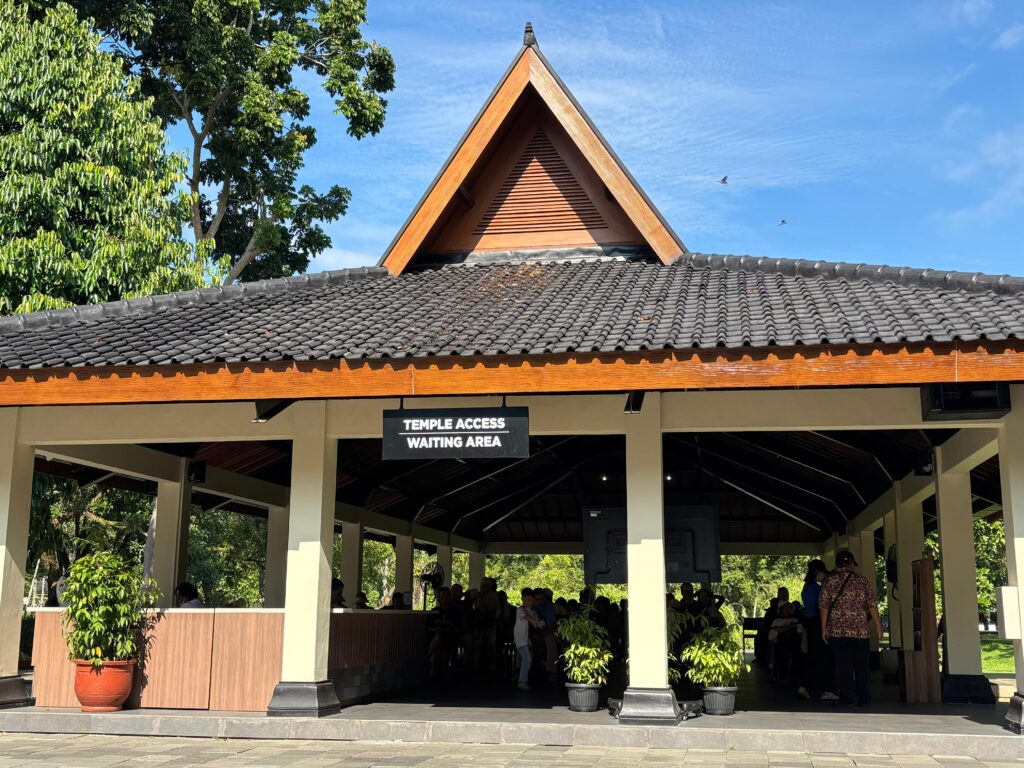
6. How to Book Tickets of Borobudur Temple
There are multiple ways to book your ticket, so provided the best ones here for your ease:
a. Regular Tickets via Traveloka
Regular Borobudur entry tickets can be purchased in advance through Traveloka, Indonesia’s leading online travel platform. Booking in advance is recommended for weekend visits and peak holiday periods when specific time slots fill up quickly.
- Download the Traveloka app on iOS or Android, or visit traveloka.com
- Search for Borobudur under the Attractions section
- Select your preferred date and time slot
- Choose your ticket type (ground level or climb)
- Pay via credit card, debit card, GoPay, OVO, or bank transfer
- Receive a QR code confirmation to show at the entrance gate
Traveloka bookings for Borobudur can be made at traveloka.com. The platform occasionally runs promotional prices and cashback offers on Borobudur tickets, so check the promotions section before completing your booking.
b. Sunrise Tour via Travel Agent
The sunrise tour cannot be purchased through Traveloka or at the gate. It must be booked through a registered travel agent or through Manohara Resort directly. This is a firm rule with no exceptions. If you arrive at the gate on the morning hoping to purchase a sunrise ticket, you will be turned away.
Several reputable operators in Yogyakarta offer Borobudur sunrise packages, often combined with hotel pick-up, transport, breakfast after the visit, and sometimes a guide. Prices vary depending on what is included, but expect to pay IDR 1,000,000 or above for the ticket itself plus additional costs for transport and other inclusions.
Read also : Borobudur Sunset Complete Details
7. How to Get To Borobudur Temple
Borobudur is located approximately 40 kilometres northwest of Yogyakarta city centre, near the town of Muntilan in Magelang Regency. The journey takes between 60 and 90 minutes depending on traffic and mode of transport.
a. Private Car with Driver (Recommended)
The most practical way to reach Borobudur from Yogyakarta is by hiring a private car with a driver. This is especially relevant for sunrise visits where you need to leave Yogyakarta by 3:30 AM to 4:00 AM when public transport is not operating. A full-day private car hire including driver and fuel costs approximately IDR 350,000 to 500,000 and allows you to combine Borobudur with Prambanan or other sites in the same day. Book through your hotel, a local tour operator, or platforms such as Klook.
b. Grab or Gojek Ride-Hailing
Grab and Gojek cars operate the route from Yogyakarta to Borobudur during daylight hours. A one-way GrabCar typically costs IDR 80,000 to 130,000 and takes around 60 to 75 minutes. This option is suitable for regular daytime visits but is not reliable for sunrise tours due to the very early departure time required. Availability of drivers at 3:30 AM cannot be guaranteed.
c. Transjogja Bus and Shuttle
A budget bus and shuttle connection from Yogyakarta to Borobudur is available via the Transjogja bus network combined with a tourist shuttle service from Jombor Terminal. Total journey time is approximately 90 minutes. This is the cheapest option at roughly IDR 20,000 to 30,000 total, but is only suitable for regular daytime visits and requires comfort with navigating local transport connections.
d. Organised Tour from Yogyakarta
Dozens of tour operators in Yogyakarta offer day trips to Borobudur, either standalone or combined with Prambanan. These typically include hotel pick-up, transport, a guide, and sometimes lunch. Prices range from IDR 200,000 to 500,000 per person depending on group size and inclusions. This is the most convenient option for visitors who prefer not to arrange transport independently.
Check this article for more details about How to Get to Borobudur Temple from Yogyakarta City and check this link for Borobudur Temple Combination Package
8. Dress Code for Borobudur Temple
Borobudur is a Buddhist pilgrimage site and respectful dress is required. The dress code is enforced at the entrance and visitors who do not comply will be asked to cover up before entering.
- Shoulders must be covered: no sleeveless tops, tank tops, or off-shoulder clothing
- Knees must be covered: no shorts above the knee, no short skirts
- Upanat sandals are provided and must be worn on the monument: you will change into them at the base of the climb
- Comfortable footwear for the park grounds is recommended: the walk from the main gate to the monument is approximately 10 to 15 minutes
Lightweight, breathable clothing is practical in Java’s tropical climate. Mornings are cool, particularly at sunrise when temperatures at the monument can drop to around 20 degrees Celsius, so a light layer or jacket is useful for early visits. By midday the temperature rises to 30 to 33 degrees Celsius and the stone surfaces of the monument radiate heat. Bring a hat, sunscreen, and a refillable water bottle.
9. Suggested Combination Tours with Borobudur Temple
Borobudur sits at the western end of one of the richest concentrations of ancient monuments in the world. Within 60 kilometres to the east lies Prambanan. To the northeast is the active volcano Merapi. The combinations below represent the most popular and rewarding ways to build a full itinerary around a Borobudur visit.
a. Borobudur and Prambanan Temple Tour Package
This is the classic Yogyakarta day tour and with good reason. Borobudur and Prambanan Temple represent the two great poles of ancient Javanese civilisation: one Buddhist, one Hindu, both built within decades of each other in the 8th and 9th centuries. Visiting both in a single day gives a sense of the extraordinary cultural achievement of this period that neither site alone can convey.
The practical itinerary involves an early departure from Yogyakarta to reach Borobudur for the first time slot at 8:30 AM, spending two to three hours there, then driving approximately 90 minutes east to Prambanan for an afternoon visit. Arriving at Prambanan by 1:30 PM gives you three to four hours, including the golden hour before sunset. A private car with driver is essential for this route as there is no direct public transport connection between the two sites.
Tip: Book the Borobudur time slot for 8:30 AM and the Prambanan visit for late afternoon. This gives the best light at both sites and avoids the worst of the midday heat at Prambanan.
Check this article for details about Prambanan Temple. And check this link for Borobudur and Prambanan Temple Tour Package Option
b. Borobudur Sunrise and Prambanan
The most ambitious and rewarding itinerary pairs a Borobudur sunrise with an afternoon visit to Prambanan. Leave Yogyakarta at 3:30 AM, watch sunrise at Borobudur, explore until 8:00 AM, have breakfast near the site, then rest for an hour before driving east to Prambanan. Arriving at Prambanan by 2:00 PM gives you the full afternoon and sunset. This is a long day, but it combines two of the finest heritage experiences in Southeast Asia into a single itinerary.
This combination works best with a private car and driver arranged in advance. Tell your driver the full itinerary so the timing can be managed smoothly. Some tour operators in Yogyakarta offer this as a packaged day tour with guide, transport, and both tickets included.
c. Borobudur and Merapi Volcano
Mount Merapi is one of the world’s most active volcanoes and its dark cone is visible from the upper terraces of Borobudur on clear mornings. Combining a Borobudur visit with a Merapi jeep tour creates a day that moves between the ancient and the geological, each highlighting the other in unexpected ways.
Merapi jeep tours depart from Kaliurang or Selo on the slopes of the volcano and take visitors through the 2010 eruption disaster zone, past lava rivers and buried villages, to viewpoints offering close views of the crater. Tours typically run for two to three hours and cost IDR 350,000 to 500,000 per jeep. The combination works best as a morning Borobudur visit followed by an afternoon Merapi jeep tour, returning to Yogyakarta by early evening.
You can also combine the Merapi at Sunrise then Borobudur Temple after.
10. Smaller Temples Near Borobudur Temple
Your Borobudur ticket gives you access to two smaller temples nearby that most visitors skip entirely. Both are worth the short detour.
a. Pawon Temple
Pawon is a small Buddhist temple located approximately 1.7 kilometres east of Borobudur, sitting directly on the alignment between Borobudur and Mendut. Scholars believe the three temples are linked by a ritual processional route, though the exact ceremonial relationship is debated. Pawon is compact and elegantly proportioned, with fine kala carvings above its doorway and relief panels depicting figures scattering jewels and coins, thought to represent the bodhisattva Kuvera, guardian of wealth. The site receives very few visitors relative to Borobudur and can usually be explored in complete quiet.
b. Mendut Temple
Mendut sits approximately 3 kilometres east of Borobudur and is generally considered the most important of the three aligned temples. Its main chamber houses three extraordinary statues: a large seated Vairocana Buddha flanked by Avalokitesvara and Vajrapani. These are among the finest Buddhist sculptures in Java and are far better preserved than most of the statuary on Borobudur itself. Mendut is still an active place of worship and Buddhist ceremonies are held here during the Vesak full moon festival each May, when thousands of pilgrims walk in procession from Mendut to Borobudur. Both Pawon and Mendut are worth visiting if time allows.
Together with Borobudur, these three temples form a ritual processional route. Cycling or walking between all three is a rewarding half-day. During the Vesak full moon festival each May, thousands of pilgrims walk this route from Mendut to Borobudur in one of Java’s great religious processions.
11. Top 10 Things to Do Near Borobudur
If you have time beyond the main temple, the Borobudur area has more to offer than most visitors realise.
- Sunrise from Borobudur Temple: The headline experience. Ticket IDR 1,000,000, must book in advance. Limited to roughly 100 visitors per morning.
- Sunrise from Setumbu Hill: Budget alternative at IDR 30,000. Panoramic view of the full monument from outside, with mist and volcanoes as backdrop. Arrive by 5:00 AM.
- Cycling through the villages: Flat rice-field lanes through traditional Javanese villages. Bicycle rental from IDR 50,000 per day at the entrance.
- Mendut and Pawon Temples: Included with your ticket. See Section 9 above.
- Pottery making in Nglipoh Village: 4 km from Borobudur. Watch and try traditional hand-thrown earthenware. Finished pieces available to buy.
- Chicken Church (Gereja Ayam): 4 km away. A giant concrete dove-shaped structure built in the 1990s. Unusual photography spot with hilltop views.
- River rafting on the Elo River: Beginner-friendly rapids through volcanic boulder gorges. Around IDR 125,000 per person, tours 2 to 3 hours.
- Samudraraksa Museum: Inside the park, usually included with your ticket. Houses a full-scale replica of an ancient Javanese ocean-going vessel.
- Limanjawi Art House: Free entry. Local artists create paintings using cigarettes and mosquito coils instead of brushes. Genuinely unique.
- Selogriyo Temple and Menoreh Hills: 40 minutes by car. A remote hillside Hindu temple reached by a forest walk, with viewpoints looking back over the Kedu Plain toward Borobudur.
Check this article for more details about Things to Do in Borobudur Area
12. What Is the Best Time to Visit Borobudur?
The best time depends on what kind of experience you want. Early morning is generally more comfortable because temperatures are cooler and the light is softer. It also gives you more time to continue your trip to other attractions around Yogyakarta or Central Java.
A regular morning structure session is a good option for visitors who want to experience the temple without paying the premium price for sunrise. Sunrise offers a more atmospheric experience, but it requires a much earlier departure and a more expensive ticket.
Midday visits are still possible, but the upper terraces can feel much hotter because there is limited shade on the monument. If photography is important to you, morning and late afternoon generally provide more interesting natural light than the middle of the day.
Borobudur Temple is unlike any other monument in the world. It is not simply large or old. It is a complete cosmological statement in stone, a map of the Buddhist universe expressed through architecture, sculpture, and the physical act of climbing from base to summit. The visitors who understand this leave with something that stays with them. The visitors who rush through in an hour leave with photographs.