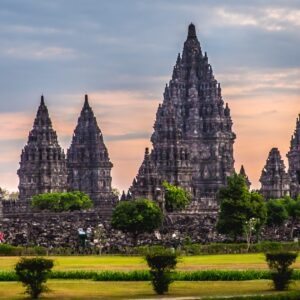
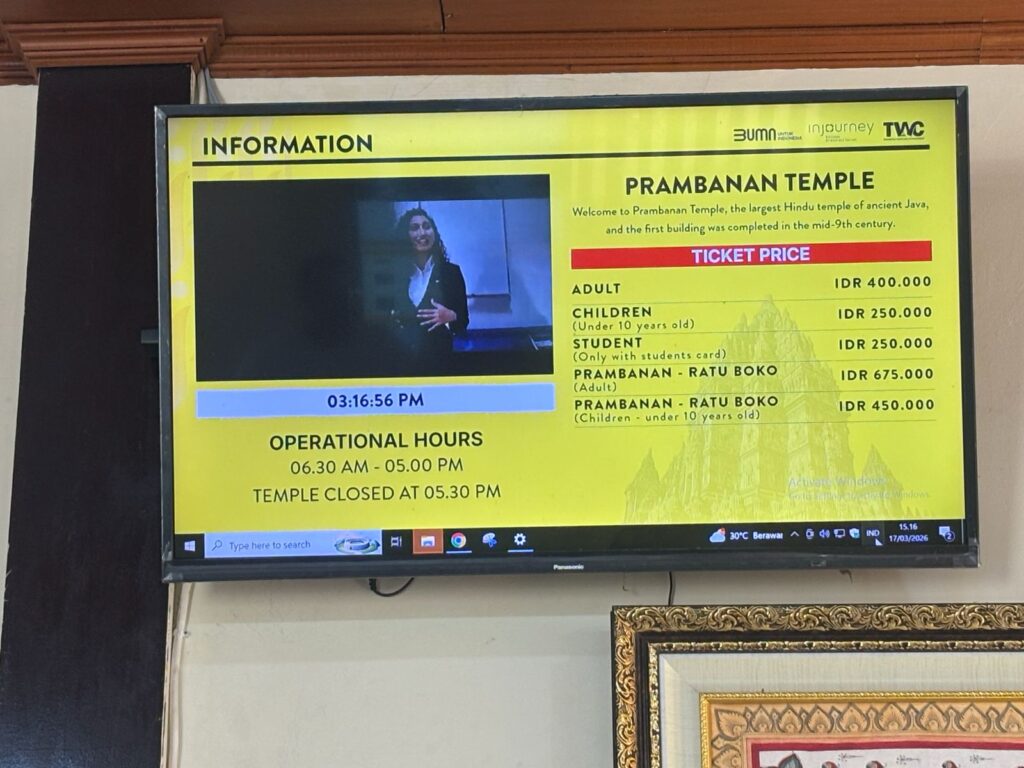
Quick Answer: The Prambanan Temple ticket price in 2026 is around IDR 400,000 for foreign adults and IDR 250,000 for foreign children. Prambanan Temple is open every day, with the official ticketing platform listing opening from 06:30 WIB. The temple area generally operates until around 17:30 WIB. On Mondays, the site remains open, but Zone 1 (the main temple courtyard) is closed for maintenance, while other accessible areas can still be visited. Most visitors should allow around 2–3 hours to explore the complex.
Prambanan Ticket Prices (Entrance Fee) 2026
Prambanan uses a two-tier pricing system separating domestic visitors from foreign tourists. Prices are managed by PT Taman Wisata Candi. Verify at the gate before visiting as prices can be updated.
| Visitor Type | Price (IDR) | Approx. USD |
| Foreign Adult | IDR 400,000 | USD 25 |
| Foreign Child (under 10) | IDR 250,000 | USD 18 |
| Indonesian Adult | IDR 50,000 | USD 3 |
| Indonesian Child (3-10) | IDR 25,000 | USD 1.50 |
| Child under 3 | Free | – |
What Is Included in the Ticket?
A standard Prambanan Temple ticket gives visitors access to more than just the main Prambanan temple complex. The ticket generally includes entry to several archaeological sites within the park.
a. Prambanan Temple Complex
Visitors can explore the main Hindu temple complex, including the prominent temples dedicated to Shiva, Brahma, and Vishnu, as well as the surrounding temple structures.
b. Sewu Temple
The ticket also includes access to Sewu Temple, a large Buddhist temple complex located within the same archaeological park.
c. Lumbung and Bubrah Temples
Visitors can also explore Lumbung Temple and Bubrah Temple, which are located between the main Prambanan complex and Sewu Temple.
d. Prambanan Museum
Access to the Prambanan Museum is also generally included, where visitors can learn more about the history, restoration, and archaeological significance of the temple complex.
Note: Ticket inclusions, access areas, and visitor regulations may change. Always check the latest information on the official Prambanan booking platform before your visit.
Before we continue, please consider BorobudurSunrise.com if you need tour package in Yogyakarta City. We have an excellent review by Trip Advisor or by Viator. You may check our tour package in this link : Yogyakarta Tour or MountBromoIjen.com. You can also send us an email at [email protected] or just simply contact us by pressing the whatsapp button in the right corner.
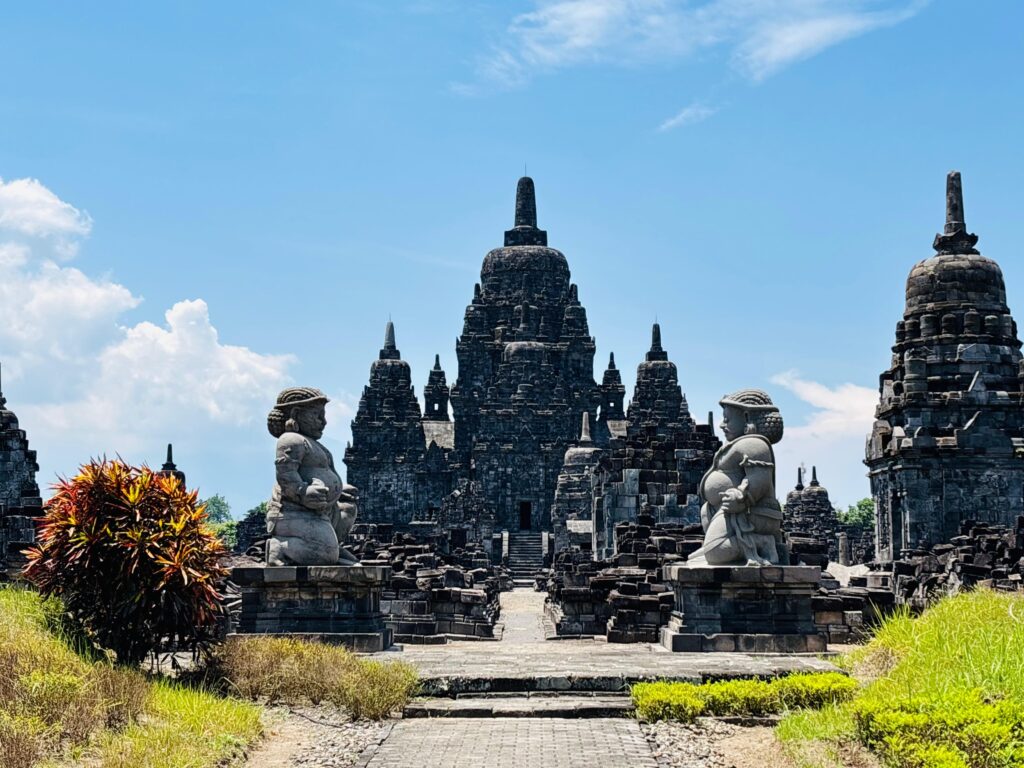
Opening Hours of Prambanan Temple
| Day | Hours |
| Tuesday to Sunday | 6:30 AM to 5:00 PM |
| Monday | Inner courtyard closed (maintenance) |
| Last entry | 4:30 PM |
Note : 06.30 AM is the opening of ticket counter, you can only enter the main yard at 07.00 AM. And the last time to purchase the ticket or to enter the gate is at 16.30 PM. At 17.30 PM everyone must leave the main yard.
Important: The main inner courtyard where the three principal towers stand is closed every Monday for routine maintenance. The outer zone and museum remain open, but you cannot enter the central compound. Do not visit on a Monday if the main temples are your priority.
Monday Access at Prambanan
Prambanan remains open on Mondays, but access is slightly different. On Mondays, Zone 1 (the main temple courtyard) is closed for regular maintenance. Visitors can still explore the surrounding park and other accessible areas of the Prambanan complex.
Best Time to Visit Prambanan Temple
Early Morning: 6:30 AM to 8:30 AM
Arriving at opening is the single best strategy for avoiding crowds. Tour buses from Yogyakarta typically do not arrive until 9:00 AM, giving you two to three quiet hours. The morning light is soft and directional, revealing the detail in the carved reliefs that harsh midday sun flattens. Temperatures are comfortable at around 24 to 26 degrees Celsius. This is the best window for photography and for reading the Ramayana panels without navigating tour groups.
Sunset: 4:30 PM to 6:00 PM
Sunset at Prambanan is genuinely special. The grey volcanic stone glows amber in the late afternoon light and the contrast between the darkening sky and the towers is the classic image of Prambanan. This is also the most popular window, so expect moderate to high crowds, particularly on weekends. Weekday afternoons are noticeably quieter. The best combination is a late afternoon visit followed directly by the Ramayana Ballet performance after dark.
What to Avoid
- Midday (10:00 AM to 2:00 PM): Harsh overhead light, maximum heat, peak crowds from tour buses
- Mondays: Inner courtyard closed
- Indonesian public holidays (Eid Al Fitr, Christmas, New Year): Very crowded
- Long weekends
- January and February: Highest rainfall; afternoon thunderstorms likely
The dry season from April to October is the best overall period to visit Prambanan. Skies are reliably clear, temperatures are warm but manageable, and the outdoor Ramayana Ballet runs its full season. June, July, and August bring the largest number of international visitors, so the sweet spot for combining good weather with reasonable crowds is April to May or September to October.
Within any given day, the light changes dramatically. The Prambanan towers are oriented to face east, which means the carved facades catch direct morning light from about 7:00 AM. By midday the light is flat and the stone looks bleached. In the afternoon the western faces are lit, and at sunset all three towers catch the warm light equally. Photographers generally prefer the morning for the Ramayana relief details and the afternoon for wide shots of the full complex.

History of Prambanan Temple
Construction of Prambanan began around 850 CE during the reign of Rakai Pikatan from the Hindu Sanjaya Dynasty. The Siwagrha Inscription, dated 856 CE and now held in Jakarta’s National Museum, records the inauguration of a great Shiva temple that historians identify as Prambanan. The name Siwagrha translates literally as House of Shiva.
What makes Prambanan remarkable in context is that Buddhist rulers had recently completed Borobudur just 40 kilometres away. The near-simultaneous existence of these two giants, one Hindu and one Buddhist, reflects the extraordinary religious tolerance of ancient Java. The two monuments are neighbours, not rivals.
The complex originally comprised 240 temples arranged in concentric courts. At its centre stood the three Trimurti towers alongside three smaller shrines housing the sacred vehicles of each god: Nandi the bull for Shiva, Hamsa the swan for Brahma, and Garuda the eagle for Vishnu. Two rows of 224 smaller perwara temples once filled the outer zones.
Prambanan was abandoned around the late 10th century, likely due to a combination of political change as power shifted east and possibly a major eruption of nearby Mount Merapi. Earthquakes toppled most of the outer temples. Dutch colonists rediscovered the site in 1811 and serious restoration only began in the 1930s. UNESCO added it to the World Heritage List in 1991. A 2006 earthquake caused fresh damage, but the main shrines now stand fully restored. The Ramayana reliefs on the walls, depicting Prince Rama’s quest to rescue Sita from the demon king Ravana, are as vivid as ever.
Insider note: The reliefs are meant to be read clockwise. Start at the east entrance of the Shiva temple and walk the full circuit to follow the Ramayana story panel by panel.
The archaeological significance of Prambanan extends beyond the main complex. The surrounding zone contains dozens of smaller restored and unrestored temples scattered across the flat plain between Yogyakarta and Solo. Temples such as Kalasan, Sari, Sambisari, and Plaosan all lie within a few kilometres and together form what archaeologists call the Prambanan Archaeological Park. Many of these can be visited independently, and cycling between them along Jalan Solo is one of the great underrated day trips from Yogyakarta.
The three main towers at Prambanan are built to an architectural formula called the Trimurti layout. Each primary temple faces east and is flanked by a smaller vahana shrine. The Shiva temple in the centre is the tallest and most elaborately decorated. Its four chambers house statues of Shiva, Agastya the sage, Ganesha the elephant god, and Durga the goddess. The Durga statue in the northern chamber is locally called the Goddess Loro Jonggrang, which has given Prambanan its popular Javanese name: Candi Loro Jonggrang, meaning the Slender Maiden Temple.
Hire a Local Guide at Prambanan Temple
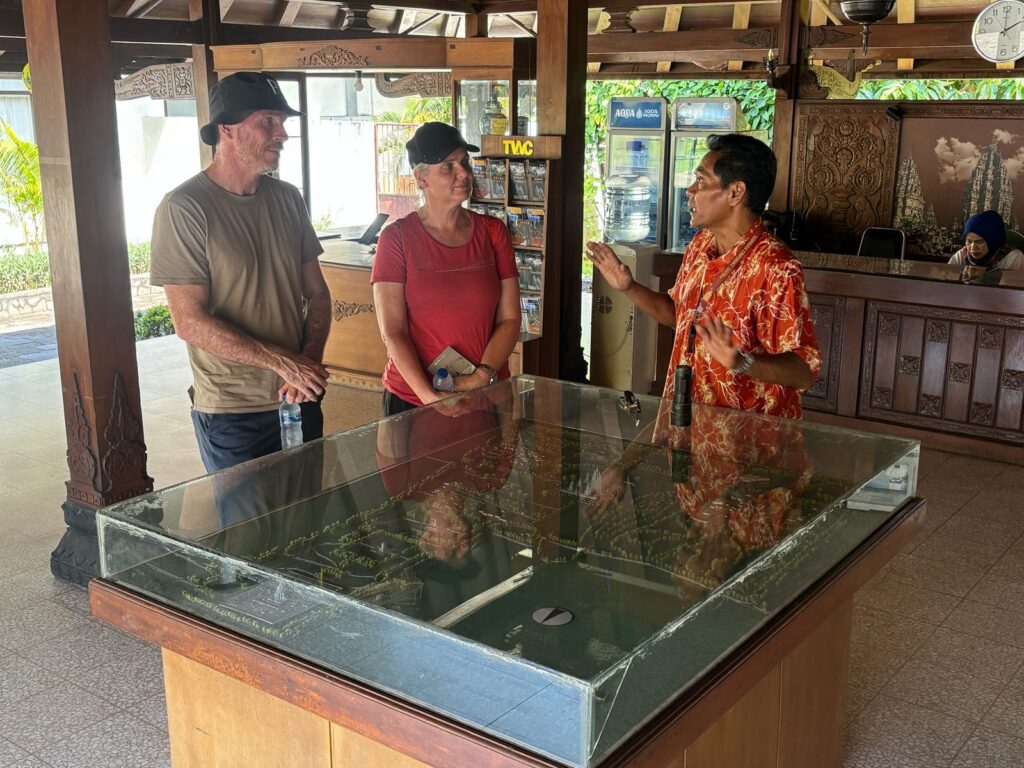
Walking around Prambanan without a guide is possible, but hiring a knowledgeable local guide transforms the visit. The Ramayana reliefs contain dozens of narrative panels that, without context, appear as repetitive ancient carvings. With a guide explaining each scene, the same walk becomes a storytelling experience that stays with you long after leaving.
Registered guides are stationed near the main entrance. An hour guided tour of the main complex typically costs IDR 150,000 to 250,000. Adding Sewu is an additional IDR 50,000 to 100,000. English-speaking guides are readily available. A thorough tour of both Prambanan and Sewu takes around two and a half to three hours. If you book a tour from us, local guide at Prambanan Temple will be included on all of our packages.
What to ask your guide about: The Siwagrha Inscription, how to read the Ramayana reliefs in sequence, the meaning of the kala and makara carvings, and the story of the 2006 earthquake restoration.
A good guide will also point out features that most visitors walk past entirely. The kala faces above each doorway, for instance, are protective monster heads meant to ward off evil. The makara creatures flanking the stairways are hybrid sea monsters combining elements of the elephant, crocodile, and fish. Each of the 240 original temples was decorated with apsara figures, celestial nymphs carved in relief, many of which are still visible on the main temples in remarkable detail.
Beyond the main complex, a guide can take you into the Prambanan Museum near the entrance, which houses original statues and architectural fragments recovered during restoration. The museum is small but contains some exceptional pieces, including original kala heads and carved panels removed during structural repairs. Without a guide, most visitors skip it entirely.
Combination Tours with Prambanan Temple
Prambanan sits at the centre of one of the densest concentrations of ancient monuments in the world. Within a 30-kilometre radius you have Borobudur, Ratu Boko, Sewu, Plaosan, Kalasan, Sari, Sambisari, and a dozen more. The combinations below represent the most practical and rewarding ways to build a full day around Prambanan.
Borobudur and Prambanan Full Day
The classic Yogyakarta combination links Java’s two greatest monuments in a single day. Depart Yogyakarta by 6:00 AM, reach Borobudur by 7:30 AM, explore until around 11:00 AM, then drive two hours east to Prambanan for the afternoon. A private car is essential for this route as there are no direct public transport connections between the two sites. Most Yogyakarta tour operators offer this as a packaged day tour with guide and transport.
Borobudur Sunrise and Prambanan Afternoon
For the most memorable version of this itinerary, the Borobudur Sunrise tour offers restricted access to the upper platform at dawn. Tickets must be booked in advance, sell out weeks ahead in peak months. Leave Yogyakarta by 03:30 AM, watch sunrise from the upper terrace by 5:00 AM, explore until 07:00 AM, then head east for a Prambanan afternoon visit. Long but extraordinary.
Prambanan Sunset with Ramayana Ballet
This is arguably the finest single evening available in Yogyakarta. Arrive at Prambanan by 4:00 PM, explore the temples in golden light until around 6:00 PM, then stay for the Ramayana Ballet from 7:30 PM to 9:30 PM. The choreography brings to life the same Ramayana story carved into the temple walls, so the afternoon and evening become one continuous narrative experience. Class I seats are worth the premium. Performances run May through October in the open-air theatre; indoor performances are held during the wet season.
Prambanan Temple and Jomblang Cave
If you would like to combine a cultural and natural trip, you should consider Prambanan Temple and Jomblang Cave Tour. Jomblang Cave is truly magical, It’s a combination of adventure and natural beauty. It’s a place where you can challenge yourself with a thrilling 60-meter vertical descent, walk through mysterious darkness, and then be rewarded with one of the most breathtaking light displays nature has to offer. The contrast between the dark cave and the brilliant beams of light creates a spiritual experience that stays with visitors long after they’ve returned to the surface.
Frequently Asked Questions About Prambanan Temple
1. How much is the Prambanan Temple ticket in 2026?
The ticket price is around IDR 400,000 for foreign adults and IDR 250,000 for foreign children under 10. Indonesian visitors pay lower domestic rates, and children under 3 can enter free.
2. What time does Prambanan Temple open?
Prambanan generally opens from 6:30 AM, with access to the main yard starting around 7:00 AM. The last ticket and entry time is around 4:30 PM, and visitors must leave the main yard by around 5:30 PM.
3. Is Prambanan Temple open on Monday?
Yes, Prambanan remains open on Mondays, but Zone 1 or the main temple courtyard is closed for routine maintenance. Visitors can still explore the surrounding park and other accessible areas.
4. How long should I spend at Prambanan Temple?
Most visitors should allow around 2–3 hours to explore the main temple complex, Sewu Temple, Lumbung Temple, Bubrah Temple, and the museum. If you only plan to visit the main temples, around 1.5–2 hours may be enough.
5. What is the best time to visit Prambanan Temple?
Early morning is one of the best times to visit because the weather is cooler and crowds are usually lighter. Late afternoon is also popular for sunset views, especially for visitors planning to continue with the Ramayana Ballet.
Plan Your Prambanan Temple Visit with Us
Planning to visit Prambanan Temple without the hassle of arranging transport, tickets, and timing on your own? BorobudurSunrise.com can help you organize a more convenient trip with private transport, local guide assistance, and flexible tour options based on your travel plan.
Explore our Prambanan Temple tour packages, including Prambanan Sunset Tour, Borobudur and Prambanan Temple Guided Tour, and Prambanan Sunset with Ramayana Ballet. Contact us via WhatsApp or email at [email protected] to arrange your trip in advance.